The Great Hardware Cannibalization: How SoftPOS is Disrupting Payment Terminals and Redefining Enterprise Value
Discover how SoftPOS and mPOS are disrupting traditional payment terminals — and how OEMs can reinvent themselves to unlock new enterprise value.
Imran Ahmad
11/16/20254 min read
Executive Summary: The Silent Takeover
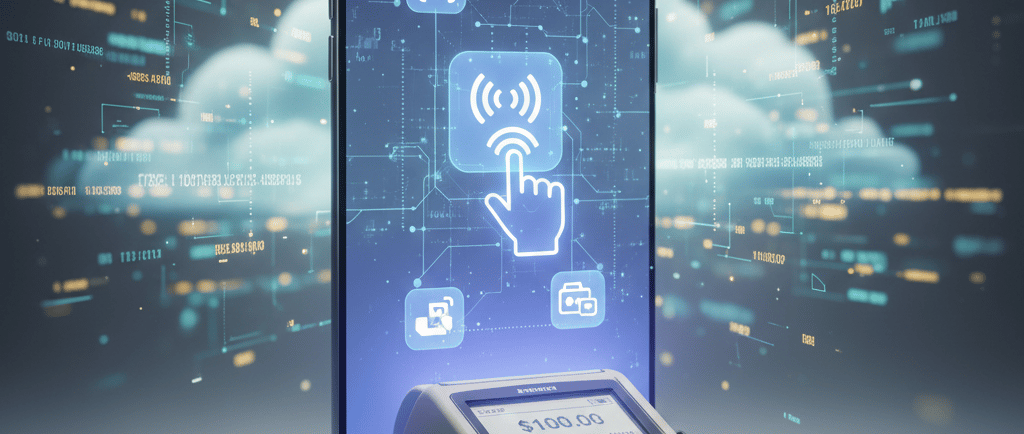
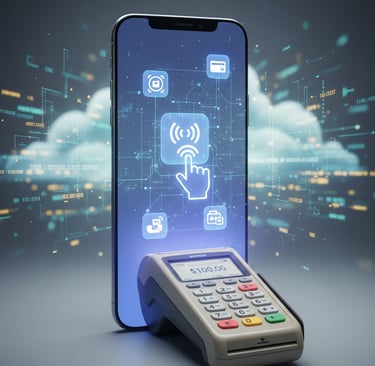
The payments industry is facing a seismic shift. For decades, the dedicated Point-of-Sale (POS) terminal—that indispensable box on the counter—was the central pillar of commerce. Today, it’s being eclipsed by something far simpler: the smartphone.
The rise of Mobile POS (mPOS) and, more recently, SoftPOS (payment acceptance that runs purely on a commodity smartphone app) is rewriting the rules. This isn't just a minor update; it's a fundamental shift, as the payments ecosystem is transitioning from being hardware-centric to software-defined.
The dedicated POS terminal is quickly turning from a core asset into a legacy liability. For hardware makers and financial technology (Fintech) leaders, the future is clear: it’s not about manufacturing more boxes—it’s about optimizing hardware, embedding intelligence, and building monetizable software layers that extend far beyond the checkout counter.
Why This Matters Now: The Perfect Storm of Disruption
Three converging trends are accelerating this payments revolution:
The Smartphone-as-a-POS Explosion: The SoftPOS market is booming, driven by major certifications from Visa and Mastercard that enable "Tap-to-Pay" on both Android and iOS devices. Merchants no longer need a proprietary machine; their own smartphone can now securely process chip, NFC, and digital wallet payments.
The Commoditization of Hardware: Dedicated POS Terminals are following the path of older, specialized equipment. Standardized chips, open APIs, and cloud-based management are transforming what was once specialized hardware into interchangeable "smart nodes." The box itself is becoming less important.
A Shift in Value Perception: Businesses now measure a payment system's value not by how reliable the terminal is, but by how agile the ecosystem is. The ability to instantly push new payment options, loyalty programs, and data insights via simple cloud updates is the new competitive battleground.
This is more than disruption; it’s architectural obsolescence. The very definition of what "hardware" means in commerce is being redefined.
The Complexity: It's Not a Simple Swap
If SoftPOS is so great, why can't we just delete the old app and download the new one? The shift is complicated because it involves an ecosystem inversion:
The Security Paradox: Traditional terminals had physical, built-in security chips. SoftPOS must virtualize that security using cutting-edge smartphone features like the Trusted Execution Environment (TEE) and advanced tokenization. This requires intense collaboration between hardware, software, and silicon makers.
Fragmentation and Compliance Nightmare: The new payment stack involves an intricate web of digital wallets, Fintech software kits (SDKs), and cloud platforms. Managing updates, ensuring continuous compliance, and maintaining security across so many diverse devices is a challenge, legacy vendors were never designed to handle.
The Rise of Edge Data: Payment terminals are no longer simple transaction endpoints. They are now data-rich nodes in a growing "Edge AI" ecosystem, capturing transaction and behavioral data. If hardware manufacturers fail to reimagine their devices as data interfaces, they will lose strategic control to the pure-software players.
In essence, hardware cannibalization is not about losing boxes—it’s about losing the entire platform on which value is built.
Beyond the Counter: Industry and Societal Impact
The transition holds major implications for everyone, from the global supply chain to the smallest business owner:
Democratization and Financial Inclusion: SoftPOS allows micro-merchants, street vendors, and gig workers to accept card payments without costly initial hardware investment. This is a huge accelerant for the cashless economy and digital inclusion worldwide.
De-Industrialization of the Payments Supply Chain: Terminal manufacturers, logistics, and maintenance companies face pressure on their profit margins. OEMs must move "up the stack," transforming from hardware "maker" to software "monetizer."
The Birth of the Smart Edge Gateway: Future payment hardware will be specialized for new forms of commerce, integrating things like vision AI (for fraud and inventory), voice commerce, and biometric verification. The POS device evolves into a smart edge gateway, not just a transaction box.
How Enterprises Can Future-Proof Their Business
To survive and thrive, businesses must treat their payment system as a strategic edge asset, not just a transaction interface:
Converge Payments + Edge AI: Use payment points (mPOS or hybrid terminals) as "inference nodes" to run real-time analytics—things like basket analysis, upsell prompts, or instant fraud alerts.
Implement Hardware–Software Co-Design: Partner with technology vendors to ensure hardware is designed to be "softwarized by default," where value scales with firmware and data services, not with the volume of physical components sold.
Adopt Lifecycle Monetization: Shift from one-time terminal sales (CapEx) to a subscription or API monetization model (Hardware-as-a-Service). Offer cloud-based fleet management and extend revenue through data-as-a-service (anonymized transaction intelligence).
A Pivot for POS Hardware Manufacturers
For a hardware OEM, this is the roadmap to resilience:
Build a Software Platform, Not Just Devices: Create device-agnostic payment orchestration platforms. Develop robust SDKs and APIs that enable Fintech partners to integrate new analytics and loyalty features onto the platform easily.
Redefine the Hardware Value Proposition: Focus on differentiated hardware for niche verticals—for example, ruggedized terminals for logistics, vision-enabled POS for self-checkout, or biometric POS for healthcare. Invest in AI-ready chipsets that make the hardware strategic again.
Build Ecosystem Stickiness: Create app stores and marketplaces for value-added services that run on top of the hardware or software platform. Foster a developer ecosystem—making the hardware a platform, not just a product.
The race is on: The winners will be those who embrace the reality that the future of payments is defined by software, not solely by the box on the counter.
Contact
Get in touch: connect@ea-chat.com
Subscribe
© 2024. All rights reserved.