
Frictionless Checkout: The Future of Retail is Fast, Invisible, and Intelligent.
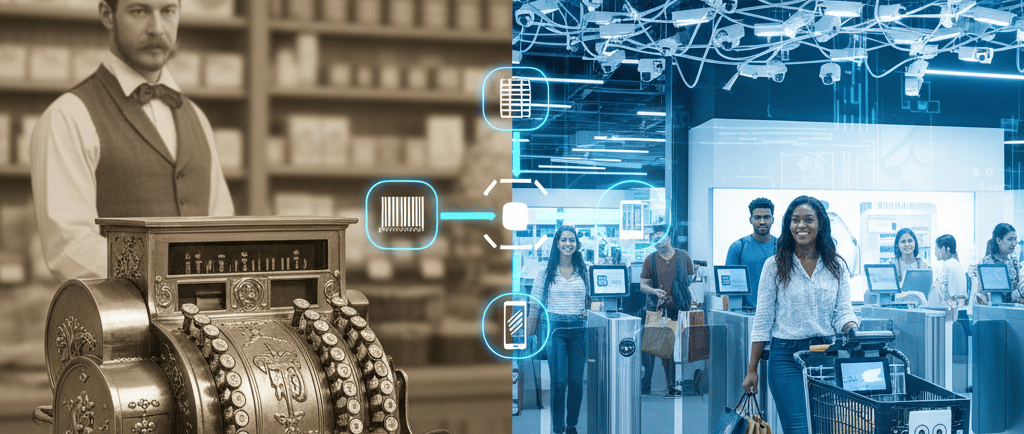
The best checkout is no checkout. Trace the 150-year evolution of the cash register and see how AI, smart carts, and computer vision are finally eliminating the line.
Imran Ahmad
11/9/20256 min read
Introduction: The Checkout Revolution Begins
Picture this—you walk into a store, grab what you need, and walk out - no lines, no scanning, no stopping to pay. What once felt like science fiction is now becoming a retail reality. The humble cash register, born in the 1880s to deter theft, has evolved dramatically, but the checkout process remains the single biggest bottleneck in the physical shopping journey.
Checkout lines cost US retailers billions of dollars annually in lost sales and labor inefficiency. This pain point is driving a new frontier: frictionless checkout. Driven by advances in artificial intelligence, computer vision, and sensor technology, retailers are reimagining the shopping experience to eliminate delays and make paying as seamless as picking up a product.
Whether it’s Amazon Go’s walk-in/walk-out stores, Sam’s Club’s Scan & Go app, or smart carts that tally your purchases in real time, the future of checkout is fast, invisible, and intelligent.
In this blog, I will explore the journey from traditional tills to emerging frictionless formats, examine how AI is powering this transformation, and uncover the opportunities and challenges retailers face as they embrace a world where the best checkout is no checkout at all.
A Brief History of Retail Checkout
The journey from clunky cash registers to invisible checkout has spanned nearly 150 years—and each innovation has chipped away at the friction between shopping and paying.
1880s: Mechanical Cash Registers - The first mechanical cash register was invented to record sales and deter employee theft. These early tills required clerks to key in prices and calculate totals by hand, marking the beginning of automated retail transactions.
1970s: Barcode Scanners Revolutionize Speed - The introduction of the Universal Product Code (UPC) and laser barcode scanners in 1974 transformed efficiency. Cashiers could now scan items instead of manually entering prices, laying the foundation for modern point-of-sale (POS) systems.
1990s: Self-Checkout Kiosks Enter the Scene - Retailers began experimenting with self-service checkout machines. Despite initial customer resistance and reliability issues, the concept eventually gained traction, especially in high-volume environments, aiming to reduce labor costs and improve throughput.
2000s: Mobile POS and Scan-and-Go Apps - The rise of smartphones enabled mobile POS systems and "line-busting," allowing associates to ring up purchases anywhere in the store. Scan-and-Go apps emerged, letting customers scan items with their phones and pay digitally, bypassing traditional lines altogether.
2010s: Contactless Payments - Tap-to-pay cards, and mobile wallets became mainstream, offering faster, more hygienic transactions. Retailers upgraded POS terminals to support Near-Field Communication (NFC), further streamlining the payment process.
Late 2010s–2020s: The Rise of Frictionless Stores Amazon Go’s launch marked a turning point. Using computer vision, shelf sensors, and AI, these stores allow customers to walk-in, pick up items, and walk-out, charging their accounts automatically. This concept of “just walk out” shopping is now shaping the future of retail.
Today’s Landscape: Mobile POS and Self-Checkout Dominance
Retail checkout has entered a hybrid era where traditional cashier stations coexist with a growing array of self-service and mobile technologies.
Self-Checkout Kiosks
These stations are staples in grocery and big-box retail. Nearly 96% of U.S. grocery stores offer self-checkout, and 73% of consumers say they prefer the autonomy and speed when available. However, they require staff oversight—these roles often shift from simple cashiers to "checkout ambassadors" who assist with errors and loss prevention.
Mobile Point-of-Sale (POS)
Retail associates are increasingly equipped with tablets or handheld scanners that allow checkout anywhere in the store. This "line-busting" approach improves service during peak hours and enables personalized engagement, especially popular in apparel and specialty retail.
Scan-and-Go Apps
Apps that let customers scan items with their smartphones as they shop and pay in-app are gaining traction. For example, one in three Sam’s Club members use their Scan & Go app regularly. The convenience and contactless nature appeal to tech-savvy shoppers, but implementation requires robust loss prevention measures.
Contactless Payments
Tap-to-pay cards and mobile wallets are the norm. By 2022, contactless transactions accounted for over 60% of in-person payments globally. Retailers have responded by ensuring all POS terminals support NFC, enabling faster and more hygienic transactions across all checkout types.
The Rise of Frictionless Shopping: Walk In, Walk Out
Retailers are now pushing toward a bold new frontier: frictionless shopping. The goal is simple - eliminate the checkout process entirely.
Just Walk Out Stores
Amazon Go pioneered the cashierless store model, using a network of ceiling cameras, shelf sensors, and AI to track shopper movements and item selections. This model has expanded and is now being licensed to other retailers, with examples like Tesco’s “GetGo” stores in the UK.
Smart Carts
Rather than installing sensors throughout the entire store, some retailers are implementing smart shopping carts. These carts use built-in cameras, scales, and touchscreens to identify items as they are added.
Customers can view their running total.
Payment is completed directly on the cart.
Trials show that shoppers using smart carts spend 10–15% more per trip due to reduced friction and real-time cart totals, encouraging impulse purchases.
AI-Enhanced Scan-and-Go
Scan-and-Go apps are evolving with AI-powered verification. For example, Sam’s Club has rolled out exit scanners that use computer vision to instantly match the contents of a shopper’s cart with their digital receipt, speeding up the exit process and reducing reliance on manual checks.
Biometric and Invisible Payments
Biometric methods are gaining traction to remove even the minimal friction of pulling out a phone or card. Amazon One allows customers to pay by scanning their palm, while other providers have piloted facial recognition payments, offering a truly seamless experience.
How AI Is Powering the Frictionless Revolution
At the heart of frictionless checkout is Artificial Intelligence, quietly orchestrating the complex dance of sensors, cameras, and customer behavior. AI is the engine that makes invisible checkout fast, secure, and personalized.
Computer Vision for Item Recognition: AI-powered cameras replace barcode scanners. Deep learning models identify products by shape, packaging, and movement - no barcodes required - enabling automatic charging for what a customer takes.
Sensor Fusion and Machine Learning: Frictionless systems rely on more than just cameras. Shelf weight sensors, RFID tags, and motion detectors feed data into Machine Learning (ML) models that determine who took what, when, and how, continuously improving accuracy.
Edge AI for Real-Time Decisions: AI deployed on local, on-site servers processes data instantly, without relying on cloud latency. This allows stores to detect anomalies (like potential theft or scanning errors) in real time and respond immediately, and also enhances privacy by keeping sensitive data local.
Loss Prevention and Security: AI combats rising shrinkage with computer vision systems that monitor for missed scans, tag switching, or suspicious behavior. Predictive analytics flag patterns of misuse, helping retailers intervene before losses occur.
Personalization and Recommendations: Smart carts and self-checkout kiosks use recommendation engines to suggest complementary products or apply personalized discounts based on purchase history, turning checkout into a moment of engagement.
Opportunities for Retailers: Why Frictionless Matters
Frictionless checkout isn't just a tech trend - it’s a strategic opportunity for retailers to elevate customer experience and unlock new revenue potential.
Enhanced Customer Experience: Removing lines and delays delivers a smoother, more satisfying experience. Studies show that 86% of younger shoppers prefer stores offering autonomous checkout options, making shopping feel effortless and modern.
Increased Throughput and Efficiency: Frictionless systems allow more customers to be served simultaneously, especially during peak hours, reducing bottlenecks and improving overall store flow and transaction volumes.
Labor Optimization: Automating checkout frees up staff to focus on higher-value tasks, like customer service, merchandising, or fulfilling online orders, helping retailers maintain service levels amid rising labor costs.
Higher Basket Sizes: Convenience drives spending. Retailers piloting smart carts and scan-and-go apps report that customers spend 10–15% more per trip due to reduced friction and real-time cart totals, encouraging impulse purchases.
Richer Data and Personalization: Frictionless systems generate detailed behavioral data (tracking what customers pick up and put back), which enables highly personalized promotions, optimized store layouts, and stronger omnichannel strategies.
Challenges to Overcome: Theft, Trust, and Tech
While the benefits are compelling, frictionless checkout introduces new complexities that retailers must navigate carefully.
Theft and Shrinkage Risks: Self-checkout and unattended environments are more vulnerable to theft, with shrinkage potentially increasing.
Mitigation: Requires investing heavily in AI-powered loss prevention tools, like computer vision systems and predictive analytics, for real-time item validation and anomaly detection.
Customer Trust and Privacy: Shoppers may feel uneasy being tracked by cameras and sensors. Biometric payments raise concerns about data security and consent.
Mitigation: Retailers must be transparent about data collection, offer opt-in options, and ensure data security to build trust.
Technical Complexity and Cost: Implementing fully frictionless systems requires significant investment in hundreds of cameras, edge computing capabilities, and integration with inventory and loyalty platforms. Retrofitting existing stores can be costly and disruptive.
Reliability and User Experience: The technology must work flawlessly. Glitches, misidentified items, or payment failures can frustrate shoppers and erode trust quickly.
Mitigation: Prioritize rigorous testing and hybrid models that offer human assistance alongside automation to ease the transition.
Balancing Automation with Human Touch: Not all customers want a fully automated experience. Retailers must find a balance: using technology to streamline routine tasks while preserving opportunities for meaningful staff engagement, shifting staff from cashiers to service or tech guides.
Conclusion: The Best Checkout Is No Checkout
Retail checkout has come a long way from the clatter of mechanical registers to the quiet intelligence of AI-powered, invisible transactions. What began as a quest for speed and accuracy has evolved into a movement toward total frictionlessness, where the act of paying fades into the background of the shopping experience.
For retailers, this shift is the ultimate challenge and opportunity. The core technologies—computer vision, Edge AI, smart carts, and biometric payments—are no longer experimental. They are proven concepts that improve customer satisfaction, operational efficiency, and sales.
But success depends on more than just installing new hardware. It requires thoughtful design, robust security, and a deep understanding of customer behavior. Retailers must balance automation with empathy, data with privacy, and innovation with inclusiveness.
As we look ahead, one thing is clear: the future of checkout isn't about faster lines; it's about eliminating lines.
The best checkout is no checkout.
Join the conversation and let us know which technology - smart carts or "just walk out" stores - you think will dominate the next decade of retail!
Contact
Get in touch: connect@ea-chat.com
Subscribe
© 2024. All rights reserved.